Colombia Paternity Lawsuits for Foreign Fathers for 2025
A Guide for Paternity Disputes for Foreign Fathers in Colombia:
Discovering you may not be the biological father of a child you have been supporting is a profoundly challenging and emotionally complex situation, particularly for foreign fathers navigating the legal system of another country. In Colombia, a nation with a strong legal framework centered on the rights of the child, this scenario introduces a labyrinth of legal procedures, rights, and obligations. This guide is designed to provide a clear, step-by-step roadmap for foreign fathers who find themselves in this difficult position. You will learn the legal grounds for challenging paternity, the precise process for obtaining a definitive court order, and, most critically, the avenues available for recovering child support payments made under a mistaken belief of parentage. By following this guide, you will gain the foundational knowledge needed to understand your legal rights, prepare for the legal process, and take decisive action to correct the record and seek financial restitution.


The intersection of international family life and Colombian family law presents unique challenges. For a foreign father, a paternity dispute is not just a legal battle; it involves overcoming language barriers, cultural differences, and the complexities of a legal system that may be entirely unfamiliar. The situation is exacerbated by the financial and emotional weight of providing child support for a child who is not biologically yours. This guide directly addresses this sensitive and often overlooked issue, providing clarity and direction.
The Unique Challenge for Foreign Fathers
Foreign fathers face a distinct set of obstacles. You may be residing outside of Colombia, making court appearances and communication with legal counsel difficult. Documents from your home country, such as income statements or previous court orders, may require an Apostille to be legally valid in Colombia. Furthermore, there is often a fear that the legal system will inherently favor the Colombian mother. While Colombian law is designed to be impartial, navigating it without expert local knowledge can be daunting. The legal process requires precise adherence to Colombian codes of procedure, and any misstep can compromise your case. Understanding these challenges is the first step toward effectively overcoming them.
Related Topics of Interest for You:



Purpose of This Guide: Empowering Foreign Fathers to Recover Undue Payments
This guide’s primary purpose is to empower you with the knowledge to act. It moves beyond a simple explanation of challenging paternity and focuses on the ultimate goal for many in this situation: stopping future child support payments and recovering funds already paid. We will demystify the Colombian legal process, from identifying the grounds for a lawsuit to the final steps of correcting a birth certificate. By understanding the specific legal mechanisms, such as the impugnación de paternidad (paternity challenge), you can confidently engage with a Colombian family law attorney and make informed decisions that protect your financial and legal interests. This is your comprehensive resource for turning uncertainty into a clear plan of action.



Understanding Paternity and Child Support Obligations in Colombia
Before initiating any legal action, it is crucial to understand the foundational principles of Colombian family law regarding paternity and parental obligations. The system is built around protecting the child’s fundamental rights, including the right to an identity, to receive support from their parents, and to have a legally recognized family. These principles form the basis of every judicial decision in family matters.
Legal Framework for Paternity Establishment
In Colombia, paternity can be established in several ways. If a child is born within a marriage, the husband is legally presumed to be the father. Paternity can also be established through voluntary recognition, where a man signs the child’s birth certificate at a notary or registry office. This voluntary act carries significant legal weight and is the source of many subsequent disputes. Once paternity is legally established, by presumption or recognition, the father assumes all parental rights and responsibilities. The Constitutional Court of Colombia has affirmed that genetic testing is not only a powerful means of proof but also a fundamental right for individuals to access the truth about their biological origins, a principle that underpins the entire legal process of challenging paternity.
How is Child Support (Pensión Alimenticia) in Colombia Determined?
Child support, known in Colombia as pensión alimenticia, is a legal obligation that arises immediately upon the establishment of paternity. It is not limited to food but is intended to cover all aspects of the child’s well-being, including housing, clothing, education, and healthcare. The amount is determined based on the financial capacity of the parent and the needs of the child. For foreign fathers, Colombian courts may assess income from their home country, however their many factors that influence the ability to pay child support. Payments can be significant, potentially ranging from a percentage of the Colombian minimum salary up to 50% of a foreign father’s total income as documented on a tax return. A foreign father who is a resident in Colombia may these obligations are enforced rigorously through the Colombian legal system.
The Basis of Parental Rights and Responsibilities (Patria Potestad) under Colombian Law
Patria Potestad is a legal concept that encompasses the set of rights and obligations that parents have over their non-emancipated children. This includes the legal representation of the child, the administration of their property, and decisions regarding their upbringing, education, and health. It is a broader concept than child custody, which refers to the physical care of the child. Establishing paternity automatically grants patria potestad. Consequently, disproving paternity through a legal process is the only way to extinguish these profound and far-reaching responsibilities.
What is the Colombian Family Court Jurisdiction in Family Matters?
Family matters in Colombia, including paternity disputes, divores, and child custody cases, fall under the exclusive jurisdiction of Family Judges (Jueces de Familia). These specialized courts are responsible for hearing evidence, ordering necessary tests, and issuing binding judgments. The lawsuit must typically be filed in the municipality where the child resides, as the law prioritizes the child’s convenience and access to the justice system. Understanding the role and authority of these courts is essential, as their decisions are final and legally enforceable throughout the country. (See Rama Judicial – Ventanilla de servicios / consulta de procesos.)
How many single moms are in Colombia?
According to 2023 data from DANE, 8.2 million Colombian households have a woman as the head of the household, representing a significant increase in female headship within the family structure. The percentage of women who are heads of households rose from 38.4% in 2019 to 45.4% in 2023, highlighting a greater responsibility for care and provision shouldered by women.
The prevalence of single-mother households in the country underscores a social dynamic where paternity questions can frequently arise, making clear legal guidance essential

The Path to Disproving Paternity: Legal Grounds and Process
Challenging a legally established paternity is not a simple matter of changing one’s mind; it requires initiating a formal lawsuit based on specific legal grounds. The Colombian legal system provides a clear, albeit rigorous, path for individuals who believe they have been incorrectly named as a father.
Identifying the Need for a Paternity Challenge
The need for a paternity challenge arises when there is a serious and legitimate doubt about biological parentage. This doubt may surface due to a confession, the discovery of new information, or a simple physical impossibility of parentage (e.g., being out of the country at the time of conception). It is important to distinguish between mere suspicion and credible evidence. While suspicion is the catalyst, the legal process will demand definitive proof, which is almost exclusively provided by scientific evidence. Acting on these doubts is the first step in the legal process to rectify the situation.
Legal Grounds for Initiating a Paternity Dispute (Impugnación de Paternidad)
The formal lawsuit to challenge paternity is called impugnación de paternidad. The sole legal ground for this action is the lack of a biological link between the presumed father and the child. The person filing the lawsuit (the plaintiff) carries the burden of proving this negative biological fact to the court. This legal process can be initiated by the presumed father, the mother, the child, and in some cases, other interested parties. There are strict statutes of limitations; for instance, the presumed father generally has 140 days to file the challenge from the moment he becomes aware of the facts that discredit his paternity. Crucially, the child can challenge paternity at any time, with no statute of limitations.
What is the Role of DNA Testing in Colombian Paternity Cases?
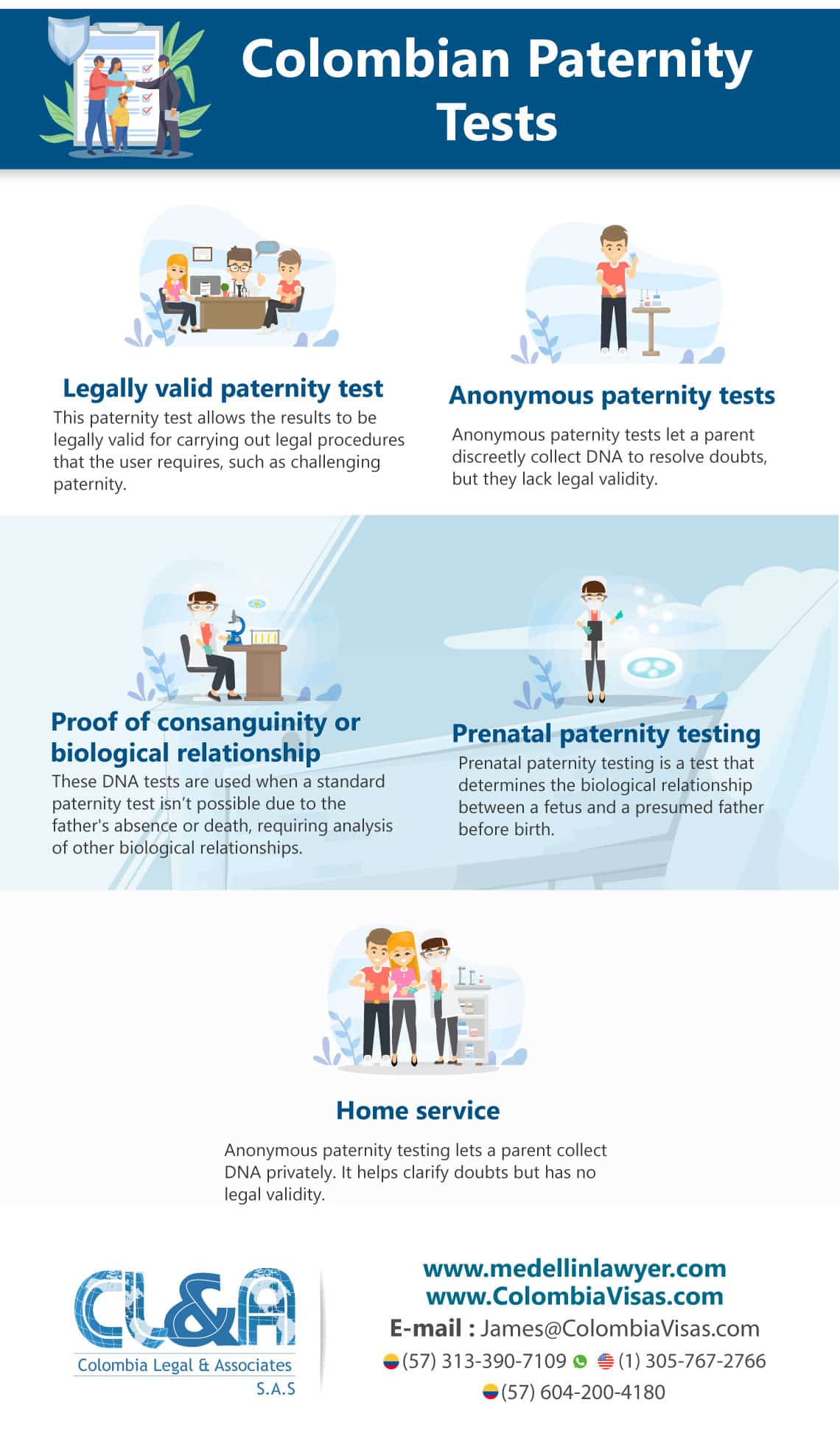
DNA testing is the cornerstone of any paternity challenge in Colombia. Colombian law (Law 721 of 2001) mandates that judges order a scientific DNA test in all paternity investigation and challenge processes. The court views this evidence as determinative. DNA tests have an accuracy rate exceeding 99%, making them the most reliable tool for resolving these disputes. A court-ordered DNA test that excludes a man as the biological father is the single most important piece of evidence required to win a paternity challenge lawsuit. The results are not merely suggestive; they are considered conclusive proof by the family court.
What is the Reliability of DNA Testing in Colombia?
Colombia has numerous accredited laboratories capable of performing legally valid DNA tests. The court will typically appoint a laboratory certified by the proper authorities, often the Colombian Institute of Family Welfare (ICBF) or coordinate through Instituto Nacional de Medicina Legal y Ciencias Forenses, to ensure impartiality and scientific rigor. The reliability of these tests is paramount. For context on technical standards, leading international services like DNA Worldwide test up to 68 DNA markers to ensure the highest level of accuracy. While local labs follow national standards, the scientific principle is the same: to achieve a probability of paternity (or exclusion) that is statistically indisputable. Refusal by any party to participate in a court-ordered DNA test creates a strong legal presumption against them.
Step-by-Step: The Legal Process for Paternity Reversal in Colombia
Navigating the paternity reversal process requires a structured approach. Each step is governed by the Colombian General Code of Procedure (CGP) – Law 1564 of 2012 and must be executed correctly by your legal counsel to ensure a successful outcome. This section breaks down the legal journey into a clear, sequential process.
Initial Consult and Gathering Documentation
The first step is to seek a consultation with a qualified Colombian family law attorney. During this meeting, you will explain your situation and provide any evidence you have. Your lawyer will require essential documents, including the child’s birth certificate (to prove the existing legal link), your identification, any existing court orders for child support, and proof of payments made. If you have any correspondence, such as an email or text message, where paternity is discussed or questioned, this can also be valuable. This initial phase is about building the foundation of your case.
Filing the Paternity Challenge Lawsuit: Where and How
Once you have legal representation, your attorney will draft and file the formal impugnación de paternidad lawsuit. This document outlines the facts of the case, states the legal grounds for the challenge (the lack of a biological link), and formally requests that the court order a DNA test and ultimately declare that you are not the father. The lawsuit is filed with the Family Court system in the judicial district where the child resides. For foreign fathers, this entire process can be handled by your attorney in Colombia through a properly executed Power of Attorney (poder especial), eliminating the need for you to be physically present for the initial filing.
The Role of the Family Judge (Juzgado de Familia) and Colombian Family Courts
After the lawsuit is filed and accepted by the court, it is assigned to a specific Family Judge (Juez de Familia). This judge will oversee the entire legal process. Their role is to ensure that the rights of all parties, especially the child, are protected. The judge reviews the initial claim, notifies the defendant (typically the mother, on behalf of the child), and manages the case calendar. The judge holds the ultimate authority to issue orders, including the crucial order for DNA testing (CGP Art. 386), and will deliver the final verdict based on the evidence presented.
Court-Ordered DNA Testing and Its Legal Weight
This is the most critical phase of the lawsuit. The judge will issue a formal court order compelling the presumed father, the mother, and the child to attend a DNA sample collection at a designated, accredited laboratory. The legal weight of this court-ordered test is absolute. Its results are considered expert evidence of the highest order. If the mother fails to bring the child for the test without a justifiable reason, the judge can interpret this refusal as a strong indication that the plaintiff’s claim is true, potentially ruling in your favor even without the test. (Collections are frequently coordinated with Medicina Legal – Pruebas genéticas for chain-of-custody.)
Legal Procedures and Hearings: What to Expect
The legal process involves several procedural stages. After the defendant is served with the lawsuit, they have a period to respond. The court will then schedule one or more hearings. The primary hearing is where the judge officially orders the DNA test and sets deadlines. Once the DNA results are returned from the lab and submitted to the court, the judge will review them. If the result is a conclusive exclusion of paternity, the case is straightforward. The judge may call a final hearing to formalize the evidence and will then proceed to issue a final judgment.
Judgment and Formal Paternity Reversal
The final step in the court process is the issuance of the judgment, or sentencia. If the DNA test excluded you as the father, the judge will issue a ruling that formally declares you are not the biological parent. This court order is the legal key to everything that follows. It nullifies the paternity that was previously established on the birth certificate. This judgment terminates your legal relationship with the child and extinguishes all future parental obligations, including the duty to pay child support. It is a definitive and legally binding document.
Our Story
James Lindzey founded the website ColombiaVisas.com, which is constantly updated with new information explaining visa resolutions, procedures, and laws in Colombia to expats. James has worked as a private investigator and paralegal in the United States through the 90s until he moved to Colombia in 2005. James arrived in Colombia in 2005 and started doing visas for expats, but currently works as Director of Legal Services for Visas by James, and Colombia Legal & Associates SAS since June of 2023.
Colombia Legal & Associates acquired the brand name Visas by James as it became a more familiar and easy way for foreigners to remember the business, than the previous Visas y Tramites Internacionales.




While MedellinLawyer.com focuses more on legal issues for expats, ColombiaVisas.com focuses more on visas, and holds the trademark Visas by James. ColombiaVisas.com is the oldest website and provider of visa information for expats in Colombia. We are proud to be the first and always on the cutting edge of providing interactive website content to our visitors.
In addition to our visa services our agency offers a full range of legal and accounting services to our clients. We are able to assist better in document collection services in the United States because of James previous legal experience in the United States.